








The 'Last Mile' of Agentic AI
For years, enterprises have invested vast sums into building sophisticated data pipelines, centralized dashboards, and powerful Large Language Models (LLMs). Yet, a stubborn efficiency gap persisted—the famed "last mile" problem.
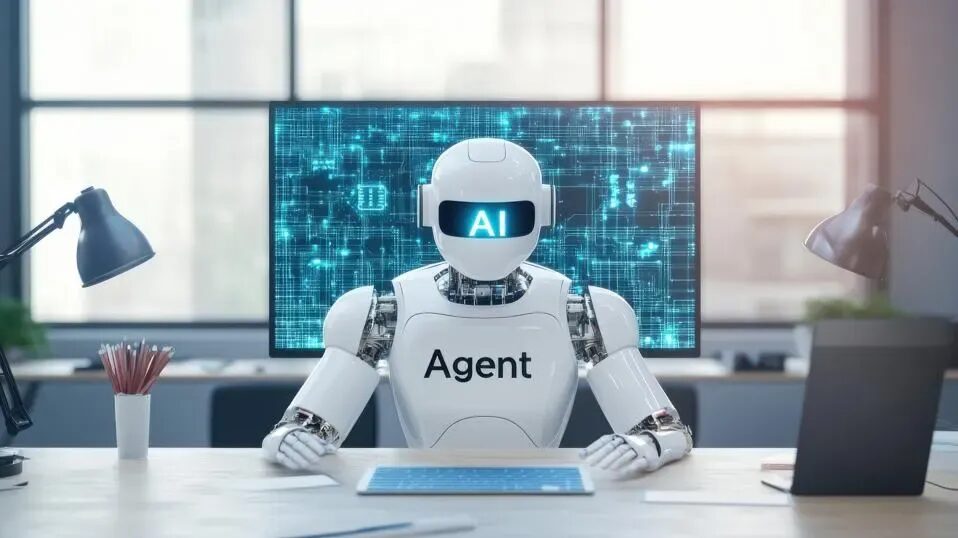
This challenge refers to the difficulty organizations face in translating high-level data insights (e.g., "customer churn risk is up 5%") into timely, on-the-ground, operational action (e.g., "automatically trigger a personalized retention discount for at-risk user ID #471"). In 2026, the focus shifts entirely: the future of productivity lies in the implementation of niche, task-specific AI agents that bridge this gap, automating the most complex and fragmented business workflows.
The Problem: The Business Intelligence Action Gap
The "last mile" is less about geography (though the term is borrowed from logistics) and more about the gap between insight and execution. Historically, even the best Business Intelligence (BI) tools and dashboards have been purely observational. They tell human managers what happened and why, but they leave the burden of acting on that insight entirely to people.
This creates several points of failure that hinder Enterprise Workflow Automation 2026:
-
Context Switching: An employee receives an alert in a BI dashboard, but must then manually log into a CRM, an ERP, and an email system to execute the necessary response. This breaks momentum and delays action.
-
Disconnected Workflows: Complex processes are often handled by disparate systems that lack communication. A sales forecast generated by one model cannot automatically trigger a purchasing order in the supply chain system.
-
Human Interpretation: Relying on human analysts to interpret, communicate, and then gain authority to act on every data point is slow, expensive, and prone to error, limiting the potential of true Enterprise Workflow Automation 2026.
The result is a persistent Business Intelligence Action Gap where the most valuable data sits inert, waiting for human intervention.
The Solution: Task-Specific AI Agents
The solution lies in the deployment of Task-Specific AI Agents—AI systems that go beyond generating content (like ChatGPT) to autonomously plan, reason, and execute multi-step actions across various software environments. These agents are built to live directly within existing business systems (CRM, HRMS, finance portals) and are designed for a single, niche purpose.
Examples of Solved 'Last Mile' Challenges:
| Business Function | Traditional 'Last Mile' Problem | Task-Specific AI Agents Solution |
| Financial Compliance | A human must manually review every large purchase request against the budget and corporate spending policy. | A Compliance Monitoring Agent intercepts the purchase order, autonomously cross-references it against budget constraints and policy rules, flags exceptions, and routes non-exceptions for instant approval. |
| IT/Support | A user submits a ticket for a failed software install or password reset. | A Self-Healing Software Agent detects the error code, identifies the missing dependency, automatically installs the required component, re-attempts the main install, and notifies the user of success—all without a human IT agent. |
| Procurement | An automated alert warns of dwindling stock. | A Procurement Optimization Agent analyzes real-time inventory, cross-checks vendor pricing and historical delivery reliability, triggers a Purchase Order (PO) with the optimal vendor via API, and updates the ERP system. |
This is the essence of Last Mile AI Implementation: eliminating the final, manual handoff required to achieve a business outcome.
The Complexity of AI Agent Orchestration Enterprise
While the result seems seamless, the technical challenge is substantial. Successfully closing the Business Intelligence Action Gap requires robust AI Agent Orchestration Enterprise frameworks that allow different specialized agents to collaborate, negotiate, and share context.
Advanced features enabling this large-scale automation include:
-
Model Context Protocol (MCP): A standardized way for agents to share memory, intent, and data about previous activities, preventing "forgetfulness" across different tasks.
-
Agent-to-Agent Protocol (A2A): This protocol allows the Task-Specific AI Agents to communicate securely with each other—for example, a "Lead Qualification Agent" can hand off a high-potential customer file directly to a "Campaign Execution Agent."
-
Deep System Integration: The agents must be integrated directly into the core APIs of enterprise systems (e.g., Salesforce, SAP). Unlike basic chatbots, they need the authority to act (create a record, change a status, move a fund) within these systems.
The organizations that master AI Agent Orchestration Enterprise will gain a decisive competitive advantage, turning their massive data lakes from mere reporting tools into autonomously responsive systems. Automating Niche Business Workflows is no longer a goal; it is the new benchmark for efficiency in Enterprise Workflow Automation 2026.
The future of the office is not about replacing humans with one single AI; it’s about deploying an entire, invisible digital workforce of Task-Specific AI Agents to conquer the Last Mile AI Implementation and finally convert insight into instant, auditable action.
What's Your Reaction?
 Like
0
Like
0
 Dislike
0
Dislike
0
 Love
0
Love
0
 Funny
0
Funny
0
 Angry
0
Angry
0
 Sad
0
Sad
0
 Wow
0
Wow
0