



The Psychology of Trends 2026: Decoding the "Psyc" of the Future Mind
In the fast-evolving landscape of 2026, understanding the psychology of trends is no longer just for marketers—it is a vital survival skill for anyone navigating the digital age. This deep dive explores the core psychology trends and the underlying psyc drivers that will define how we live, shop and connect in the coming year.
Welcome to Wordings, your premier destination for decoding the cultural and psychological shifts of tomorrow.
The Master Shift: From "What" to "Why" in 2026
By 2026, the novelty of "the new" has been replaced by a search for "the meaningful." We have entered an era where trends are driven less by aesthetic and more by nervous system regulation and identity alignment.
1. The Rise of "Continuous Care" Psychology
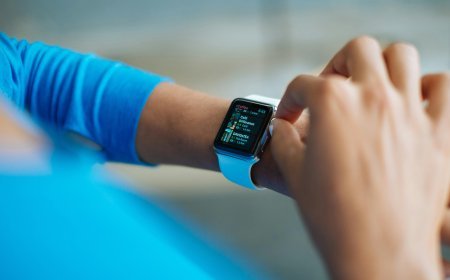
One of the most significant psychology trends in 2026 is the transition from reactive mental health to "Always-On" support. The traditional 50-minute therapy session is being supplemented by AI-integrated behavioral nudges.
-
The Psyc Factor: We are witnessing a shift toward Self-Directed Solutions.
-
Actionable Insight: People are increasingly using clinical hypnosis and nervous system regulation tools to manage "AI Anxiety"—the stress caused by the rapid pace of technological displacement.
2. Predictive Confidence & The Death of Choice Overload
For years, the "Paradox of Choice" paralyzed consumers. In 2026, the psychology of trends has shifted toward Predictive Confidence.
-
The Mechanism: Algorithms no longer just recommend; they "curate with authority."
-
The Result: Consumers now feel a sense of psychological safety when a system "knows" what they need, reducing the cognitive load of decision-making.
Core Consumer Psychology Trends for 2026
To truly master the psyc behind 2026, we must look at the "Walking Bundle of Contradictions" that is the modern human: someone who craves privacy but demands hyper-personalization.
The Personalization Paradox
In 2026, relevance is no longer a "delight"—it is a baseline requirement. If a brand or platform doesn't recognize a user's specific context, the psychological response is often one of disinterest or even insult.
-
Key Stat: 65% of people now believe society celebrates them for being "authentic," and they expect their digital environment to mirror that authenticity.
Experience Over Possession (The "Minorstone" Movement)
The psychology of trends is moving away from "The Big Life Event" toward the celebration of "Minorstones"—small, repeatable joys.
-
Why it works: In an uncertain world, the brain craves small, controllable wins. Trends that facilitate these "micro-joys" (like niche hobbyist groups or specialized local travel) are seeing massive growth.
Social Media & The New "Trust Currency"
As we look at psychology trends within social platforms, the power has shifted from the "Mega-Influencer" to the "Expert Personal Brand."
| Trend Factor | 2024/2025 Approach | 2026 Psychological Shift |
| Trust Source | Celebrity Endorsement | Niche Expertise & Peer UGC |
| Discovery | Passive Scrolling | Intentional Social Search |
| Connection | Public Feeds | Private/Broadcast Communities |
The "Quality Reset"
After years of "AI Slop" (mass-produced, low-value content), the human brain is undergoing a "Quality Reset." We are seeing a psychological craving for long-form storytelling and human-generated content that feels "felt," not just "made."
10 Frequently Asked Questions (FAQs)
-
What is the "psychology of trends"? It is the study of why certain behaviors, products, or ideas gain momentum based on human needs like belonging, status, and emotional regulation.
-
How do psychology trends influence marketing in 2026? They shift focus from selling a product to providing emotional reassurance and simplifying the user's life.
-
What does "psyc" mean in the context of 2026 trends? It refers to the psychological underpinnings—cognitive, behavioral, and emotional—that drive global shifts.
-
Are trends in 2026 more about technology or people? While technology is the tool, the trends are driven by the human reaction to that technology, such as the need for privacy and authenticity.
-
Why is "AI Anxiety" a major trend? As AI takes over more cognitive tasks, the human "psyc" responds with a need to redefine self-worth and job security.
-
What is "Predictive Confidence"? It is the psychological state where a user trusts an algorithm to make a choice for them, feeling "supported" rather than "controlled."
-
How has social media search changed psychology? Users now treat social platforms as search engines, seeking "human-vetted" answers over cold, algorithmic web results.
-
What are "Minorstones"? They are small life achievements that people celebrate to build resilience and joy in a volatile world.
-
Why is "Authenticity" more important in 2026? With the rise of deepfakes and AI content, the human brain is now hypersensitive to "uncanny valley" or inauthentic interactions.
-
Is brand loyalty dead? Not dead, but fragmented. Loyalty in 2026 is earned through shared values and "frictionless" convenience, not just history.
10 People Also Ask (PAA)
-
How can I stay ahead of psychology trends? By monitoring shifts in "Consumer Sentiment" and "Neuroscience Research" rather than just looking at sales data.
-
What is the future of mental health in 2026? A move toward "Continuous Care" using hybrid models of human therapists and AI-assisted tools.
-
Why do people still prefer experiences over things? Because experiences provide long-term "identity capital" and dopamine hits that material goods cannot sustain.
-
Is social media making us more anxious in 2026? It depends on the usage; while public feeds cause "comparison fatigue," private communities are serving as vital support systems.
-
What is "Neurodiversity Inclusion" in 2026? A trend where workplaces and products are designed to support different ways of thinking (ADHD, Autism) as a competitive advantage.
-
How does "Eco-Anxiety" affect trends? It drives a "psyc" need for brands to show radical transparency and circular economy models.
-
Why is clinical hypnosis becoming popular again? People are seeking faster, "nervous system-first" ways to regulate stress that don't require long-term talk therapy.
-
What role does humor play in 2026 trends? Humer and joy act as "psychological catalysts," helping brands connect with consumers through shared vulnerability and "Cope Culture."
-
Can AI understand human emotions? In 2026, AI is better at detecting emotions through data (biometrics, tone), but the empathy remains a human-only differentiator.
-
What is "Retail Neuroscience"? Using brain-based insights (attention, memory, and triggers) to design stores and apps that align with how the human brain actually processes information.
What's Your Reaction?
 Like
0
Like
0
 Dislike
0
Dislike
0
 Love
0
Love
0
 Funny
0
Funny
0
 Angry
0
Angry
0
 Sad
0
Sad
0
 Wow
0
Wow
0